


From Bottle to Felt Sheets:
How We Make PET Felt
In the time it takes to take a sip from a plastic bottle, 20,000 bottles are thrown away. More than 1.3 billion bottles are sold worldwide every day, and only 6% are recycled afterwards. To give plastic bottles a second life, we work closely with local recycling centers. With PET felt technology, we transform plastic waste into a versatile, durable material for interior design. Now, let’s take a closer look at the journey from bottle to one-of-a-kind products.
5 Steps of PET Felt Production Process
Step 1 – Plastic Waste
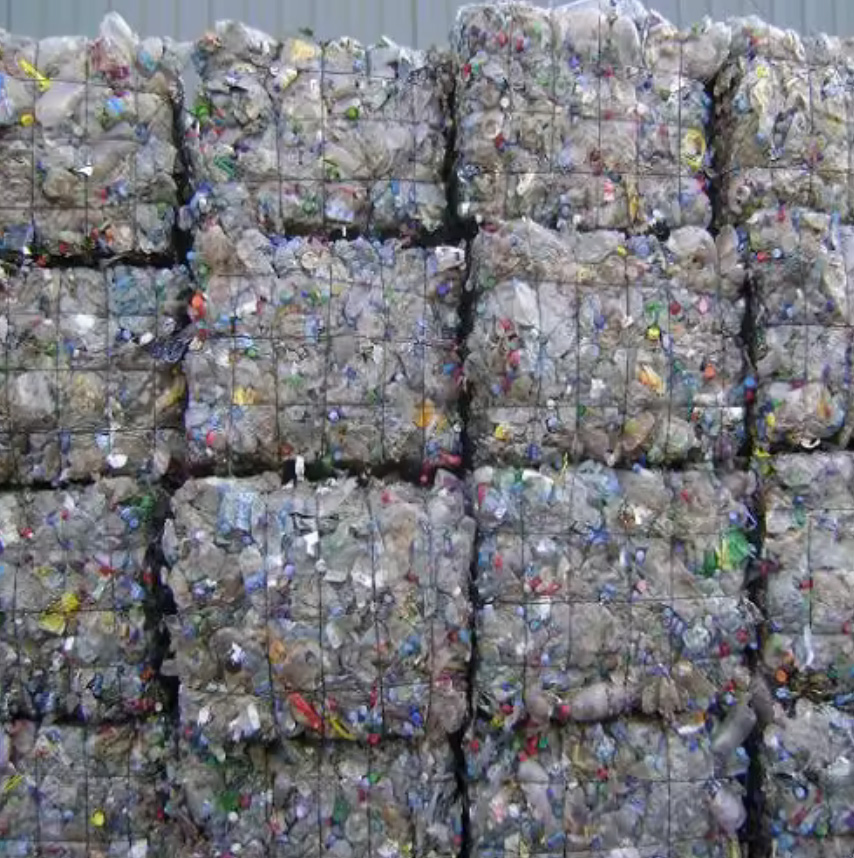
Bottles arrive at recycling facilities in tightly compressed 250 kg bales. The bales are opened, then the bottles are washed and sorted. During sorting, machines remove colored components such as caps and labels.
Step 2 – Flakes
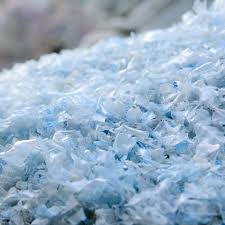
After sorting, the bottles are fed into a granulator. Powerful rotating blades shred them into flakes about 1 cm in size, while the system filters out any remaining impurities. What used to be plastic bottles is now clean, pure PET flake, ready for the next stage of transformation.
Step 3 – Fibre
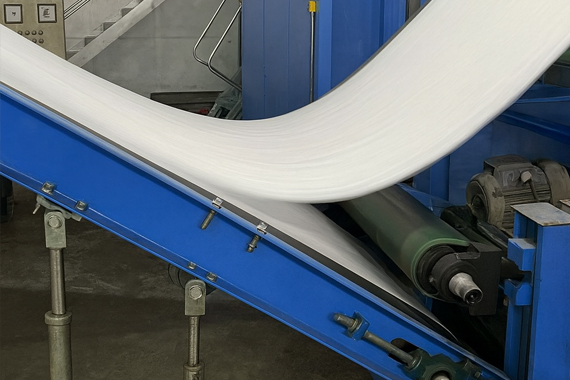
Next, the PET flakes pass through an extruder, where they are melted and spun into polyester fibers. This process transforms rigid plastic into a soft, wool-like texture. The fibers are then formed into thin sheets, ready for the felting stage.
Step 4 – Felt Sheets
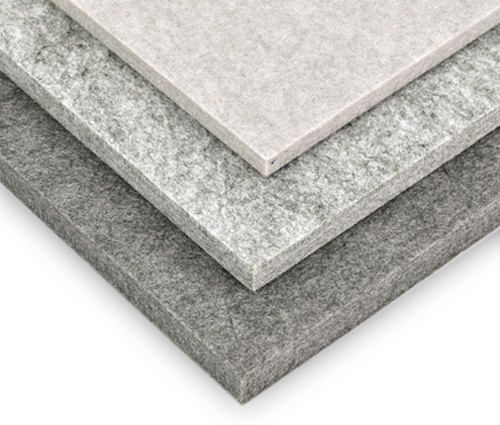
In the felting machine, the fibers are layered and compacted. Then the felting process begins: thousands of barbed needles repeatedly punch through the material, locking the fibers together and forming felt. Using the same technique, three felt layers are bonded into a dense mat, ready for pressing.
Step 5 – Products Solutions
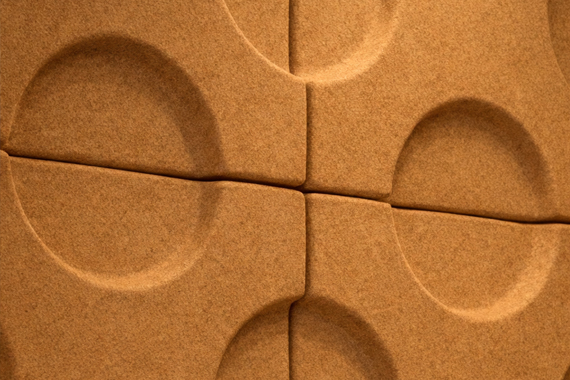
PET felt can be shaped into virtually any form. In a single molding step, a 3D pressing machine transforms a flat felt sheet into a strong, stable piece, while keeping its soft, wool-like texture. With this process, PET felt can become wall and ceiling panels, lampshades, and much more.
In the felting machine, the fibers are layered and compacted. Then the felting process begins: thousands of barbed needles repeatedly punch through the material, locking the fibers together and forming felt. Using the same technique, three felt layers are bonded into a dense mat, ready for pressing.